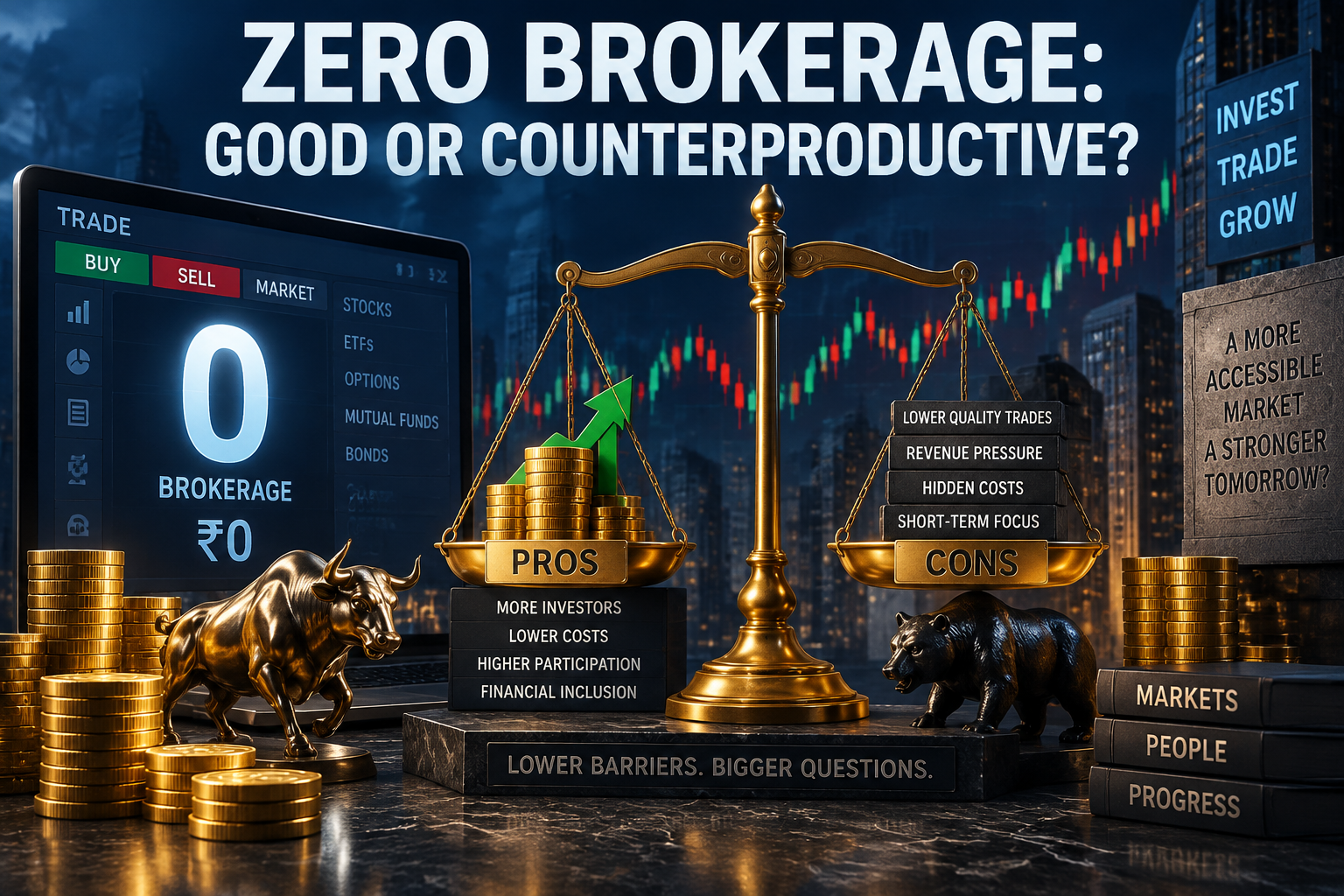
Zero Brokerage – Is it good for investors, or is it counterproductive?
The founder of Zerodha, Nithin Kamath, made an interesting statement that their zero brokerage on delivery trades had saved investors nearly ₹27,000 crore since 2016. That is tad below $3 billion and is a lot of money. Memories of…
The founder of Zerodha, Nithin Kamath, made an interesting statement that their zero brokerage on delivery trades had saved investors nearly ₹27,000 crore since 2016. That is tad below $3 billion and is a lot of money.
Memories of another day at Berkshire Hathaway
In his landmark annual newsletter in 2016, Warren Buffett made a rather pointed statement in praise of Jack Bogle, the founder of Vanguard. Now, Vanguard is a global pioneer in index-based passive investing. In his annual newsletter, Buffett said that by opting for lower cost index ETFs, Vanguard had not only provided strong returns to investors but had saved nearly $1 trillion in costs. That was a big praise when one of the masters of active investing praises another contemporary who is the father of passive investing globally. In that case the praise was warranted because Vanguard’s passive funds had actually added that $1 trillion to unit holder wealth in the form of lower costs.
Did Zerodha really save ₹27,000 crore for investors?
Technically, what Kamath is saying is probably correct. The brokerage cost on delivery tends to be the highest in the case of other brokers. By making delivery brokerage zero, the Kamath brothers made trading very enticing for Indian investors. However, it is not like delivery trading at Zerodha is entirely free because the statutory charges and the DP charges are still there. More importantly, free delivery induces to keep more money available in the trading account, which increases the float for Zerodha. Remember, they are making a lot of money by investing float in money market mutual funds. Since shares can be given as margin from DP account, this also induces them to pay and trade.
Real question is something bigger
However, the real question is something bigger. In reality, even if they saved ₹27,000 crore for investors, that did not translate into wealth transfer. That is different from the way Vanguard actually created more wealth. On the contrary, Zerodha induced investors to take on more risk, since there was no visible cost to risk. The only cost was possibility of loss, which is normal. For a short-term investor, the proposal is quite enticing. When brokerage is zero and there are only statutory charges, then people are enticed to take on more risk and trade more aggressively. Quite often, this saving of ₹27,000 crore has come at a much higher implicit cost; because people traded ignoring their risk capacity.
Overtrading is the biggest risk in this case
People often argue that Zerodha charges brokerage for intraday and F&O trades. Hence, it does not encourage aggressive trading. That is a myth. Aggressive trading can also happen in delivery-based equities, with a time frame of few days to few weeks. What happens is that the low cost and the proximate break-even points induce the person to either take on more risk or churn money more aggressively. This can increase risk of losses for the trader. Reducing the cost of investing in a long-term asset is one thing. For an equity trader or investor, zero costs distorts the relationship between risk and returns. Most traders don’t realize it; but it proves counterproductive eventually.
Want help choosing funds that suit your goals?
Start with Tick FundsDisclaimer: Mutual fund investments are subject to market risks; read all scheme-related documents carefully. SERNET is an AMFI-registered mutual fund distributor and receives commission from fund houses.
Was this article helpful?