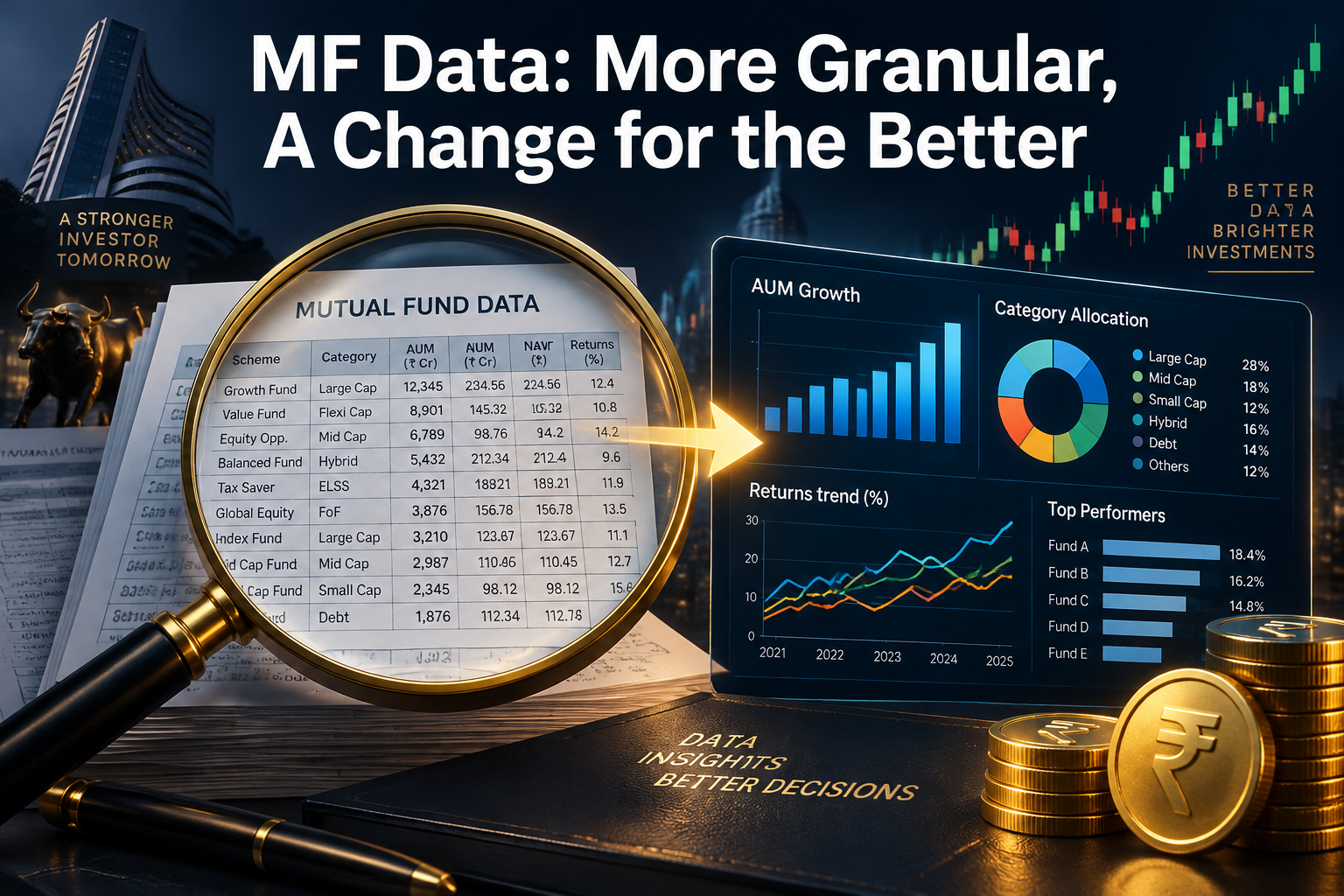
MF Data – More granular and a change for the better
The mutual funds flow data presented by AMFI for August 2026 came as a pleasant surprise. It was not only more granular under each head, but also included several new heads. For the reader, the picture is a lot more comprehensive.…
The mutual funds flow data presented by AMFI for August 2026 came as a pleasant surprise. It was not only more granular under each head, but also included several new heads. For the reader, the picture is a lot more comprehensive.
Better itemized presentation of MF flows
In the old system of MF data presentation, AMFI used to combine certain categories. For instance, effective from August 2026, AMFI has separated thematic funds from sector funds and contra funds from value funds in the active equity category. Also, in the hybrid funds category, it has separated the aggressive allocation funds from the balanced allocation funds, making the demarcation clearer. In the active debt funds category, AMFI has added a new category for sectoral debt funds. Overall, the classification of funds has now become more itemised and also granular in terms of strategy.
Adding more categories to the MF flows story
With the introduction of life cycle funds, the flows may have just started, but they represent an important category for financial planning. Like hybrid funds and goal-based funds, AMFI has now introduced flows into life cycle funds as a separate category. In addition, the flows into passive funds have now been made more elaborate. You no longer have to wonder what is contained in the Other ETFs segment, or refer to a separate report on passive flows. Passive funds have been reclassified into 3 categories; index funds, benchmark ETFs, and International Fund of Funds. Each has a specific role in portfolio diversification and their classification does help investors.
Some areas could still have been improved
AMFI has done a good job overall, but there are still some pending issues to be addressed. For understanding trends, a more use-based classification of equity funds into market-cap and themes; as well as debt funds into quality and duration would be useful. It will immediately highlight where the flow shifts are happening. On the SIP flows front, the AMFI continues to be cagey about disclosing net SIP flow data, which actually beats reason. Gross SIP flow may look self-congratulatory; but from an analytical perspective it does not offer too many check points. Also, past data becomes largely incomparable, so a smooth transition of reclassified data would have been appreciated.
Why does MF data announcement wait till 10th
That remains a key question. Today, all the data pertaining to mutual funds are already digitized. Even assuming that the stock exchange data, broker data, syndicator data, and the AMC data have to be integrated, it is more of an electronic integration. The mutual funds registry business in India is managed by essentially 2 big names; CAMS and KFIN Technologies. Both are technologically evolved companies and getting the full data collated should not take more than 2-3 days from the end of the month. That is something that AMFI needs to serious look into. Why should you announce critical flows data on tenth, when it is already available with registrars in the first few days?
Want help choosing funds that suit your goals?
Start with Tick FundsDisclaimer: Mutual fund investments are subject to market risks; read all scheme-related documents carefully. SERNET is an AMFI-registered mutual fund distributor and receives commission from fund houses.
Was this article helpful?