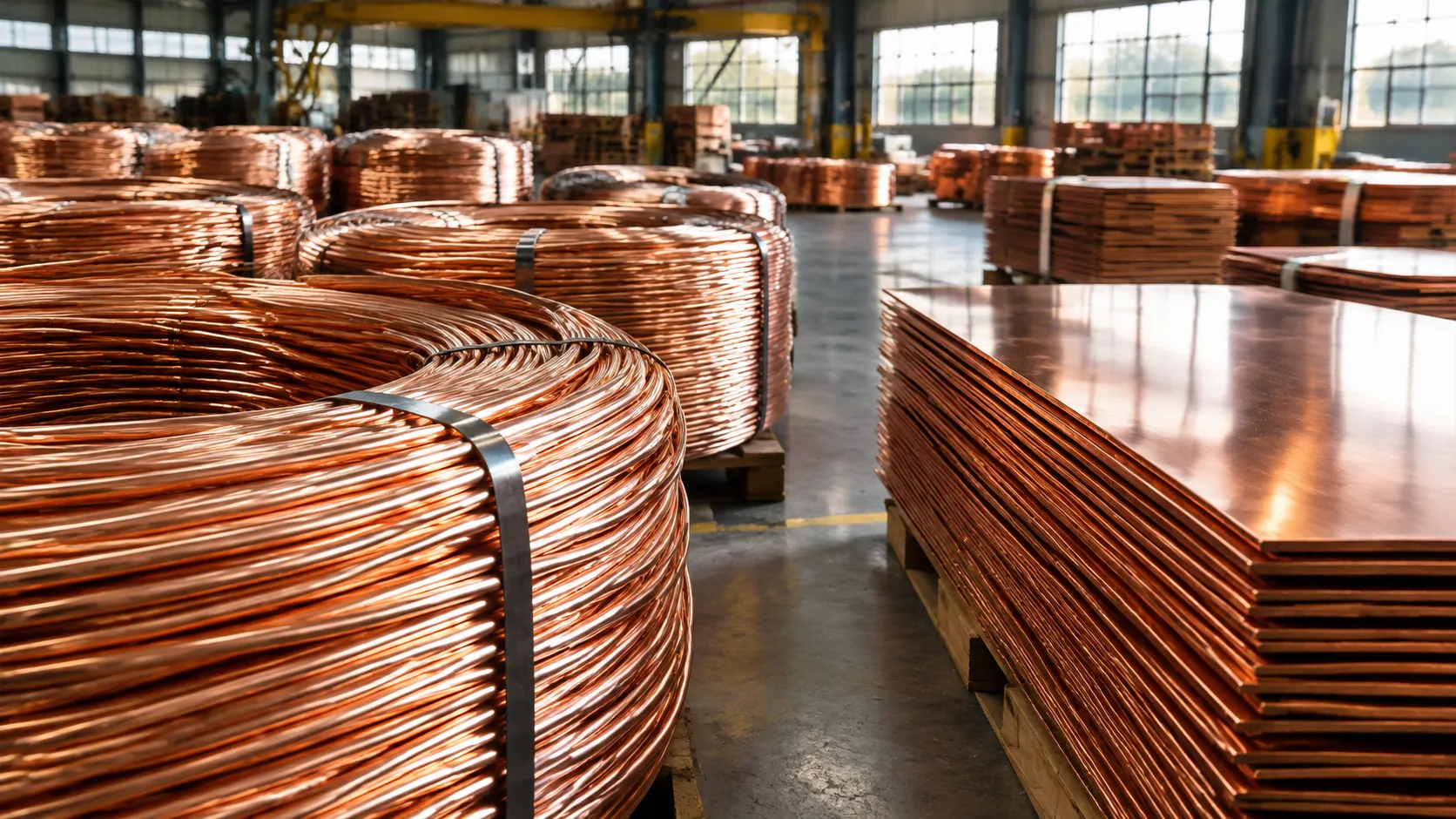
Copper – Focus shifts to companies that can secure supplies
Copper is the most in-demand metal in the market today. Demand has soared because of various reasons, but the real story is that supply has been constrained. This global shortfall has resulted in a persistent bull market in copper.
Copper is the most in-demand metal in the market today. Demand has soared because of various reasons, but the real story is that supply has been constrained. This global shortfall has resulted in a persistent bull market in copper.
Understanding the economics of copper demand
Copper has a narrow supply side and a wide demand side. Copper finds applications in transmission wires, printed circuit boards, microprocessors, semiconductors, electronic connectors, and electrical appliances. In additional, high growth areas like defence, EVs, data centres also have huge copper demand. Supply is limited to 3 producers (Chile, Congo, and Peru) accounting for 50%. The real problem is aging mines leading to supply shortfalls and higher cost of prospecting copper. New copper mines have a 17 years lead time to high-grade copper and by 2050, copper shortfall is estimated at around 44%.
Why is the demand supply mismatch likely?
Today, the demand and supply of copper of copper are approximately at par, but the gap could be as wide as 44% by 2050, unless alternate supplies come up. Copper has few alternatives, so the demand is likely to be buoyant. Also, the easy copper is already mined and more supplies of copper can only come at a steeply higher cost. Around 60-65% of the copper supply comes from Latin America and Africa and around 70% of the demand comes from Asia. Chile has been seeing its copper exports soar, even as its production has stagnated and production share has fallen from 34% to 23%. On the demand side; EVs, defence, electronics, data centres, and construction are demanding more copper.
Copper stockpiling is the next big risk
The real problem with copper is not just with the demand and supply mismatch. It is the trend towards stockpiling that is putting pressure on prices. Most countries have started to believe that copper could be the next gold. Prices of copper are up around 2.5X in the last 5 years. However, even at the current price of $14,000/MT, the price may have just about scratched the surface. The biggest stockpiler has been the US, which is currently holding about 5.9 lakh MT of copper at COMEX warehouses and going up to 1 million MT if off-exchange stocks are added. China is another big copper stockpiler in recent years. Trading houses like Trafigura, Mercuria, and Glencore are also stockpiling aggressively.
What do countries like India need to do?
India is expected to attract substantial investments in alternate energy, energy grids, transmission, construction, data centres, defence, EMS etc. All these need mountains of copper supplies and India currently producers only 10% of its copper needs. That is a risky model to follow. That is why the recent alliance between Adani and Codelco to develop the Kaburkaala mines in the Antofagasta belt is critical. If India sees itself at the pivot point of defence, electronics, and data centres; it must first secure its copper supplies. Stockpiling, like the US and China, is not India’s cup of tea with its limited resources. What Adani and Codelco have done could be the model to look at!
Trade through Choice FinX, with SERNET as your partner.
About Choice FinXDisclaimer: Investments in securities markets are subject to market risks. Broking services are provided by Choice Equity Broking Pvt. Ltd.; SERNET is not a stock broker.
Get SERNET Insights in your inbox
Market updates, IPO notes and money guides.
For preference changes, reactivation or unsubscribe, email support@sernetindia.com from your subscribed address.
Was this article helpful?