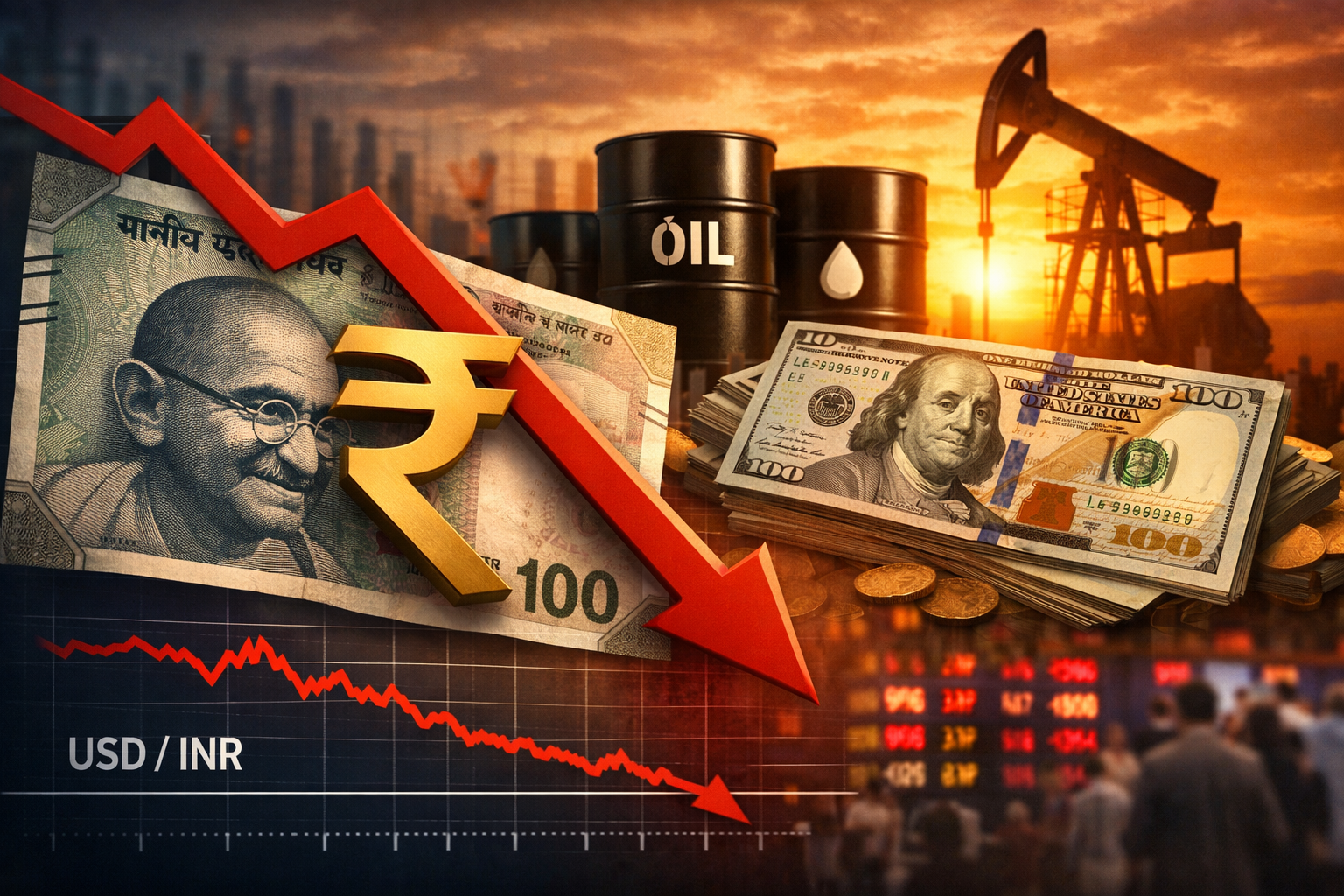
India CPI Inflation for Mar-26 edges up to 3.40% amid war impact
Supply chains have been the core of global manufacturing for over a century. The supply chain includes the entire chain of raw material sourcing and moving it to the factories and later to the markets. That is now undergoing a big change!
China and the pandemic story
Since the early 1980s, China had emerged as the epicentre of the global supply chain. Be it chemicals, electronics, electrical goods, or pharmaceuticals; the key inputs were sourced from China. Over time, China expanded beyond its borders. However, when the pandemic struck in 2020, China kept its supply chains shut for much longer than the world was prepared for. This led to immense shortages, with most countries forced to cut output. This had caused a global supply push inflation between 2021 and 2023. That is when big companies adopted the China+1 policy. Soon, Vietnam, Thailand, Taiwan, and India became critical parts of the manufacturing supply chain.
Middle East and the oil crisis
Let us now turn to the present situation. The ongoing war between US-Israel and Iran has had a lot of spillover effects. Iran has hit oil facilities across the Gulf, and that has restricted oil supply. In addition, Iran has blocked the Straits of Hormuz, which moves about 30-40% of global oil and gas. How are companies responding? India, which was largely dependent on the Hormuz Straits, is aggressively procuring oil from Russia. Apple, which used to ship chips from India via Dubai; is skipping that route altogether. Saudi Arabia is using its pipeline and its Red Sea port facility to ship oil by skirting the Straits of Hormuz. There is supply chain disruption, but there are work-arounds too.
What does this mean for the supply chain story?
One of the clear messages coming from these two stories is that; in the post-pandemic world, supply chains are getting much shorter. Countries are adapting costs and shipping routes much faster today than ever before. That means, no supply chain advantage is assured as no country will continue to rely on a single supply chain even when it is disrupted. Manufacturers are already looking at alternate supply chain models that can be tapped at short notice. Today, Apple is not entirely dependent on China for mobile phone manufacturing. It has substantial output being shipped from Vietnam, Taiwan, and India too. That is making supply chains much more flexible.
Will it be the end of supply chain monopoly?
For a long time, we have seen supply chain monopolies of various kinds. Through the 1970s and 1980s, it was the Middle East that dominated the global energy supply chain. Since the 1980s, it has become more distributed across Russia, Middle East, US, Canada, and Brazil. Since the 1990s, China dominated the supply chain for most of the global manufacturers. Today, several low-cost options are emerging like India, Thailand, Vietnam, Bangladesh etc. For now, Chinese inputs or Middle East oil & gas may not be fully replaceable. However, the days of holding supply chains to ransom are gone. Global supply chains and manufacturing have become a lot more flexible!
Turn market insight into a plan for your money.
Talk to usDisclaimer: This content is for general information and education only and is not a recommendation to buy or sell any security.
Was this article helpful?