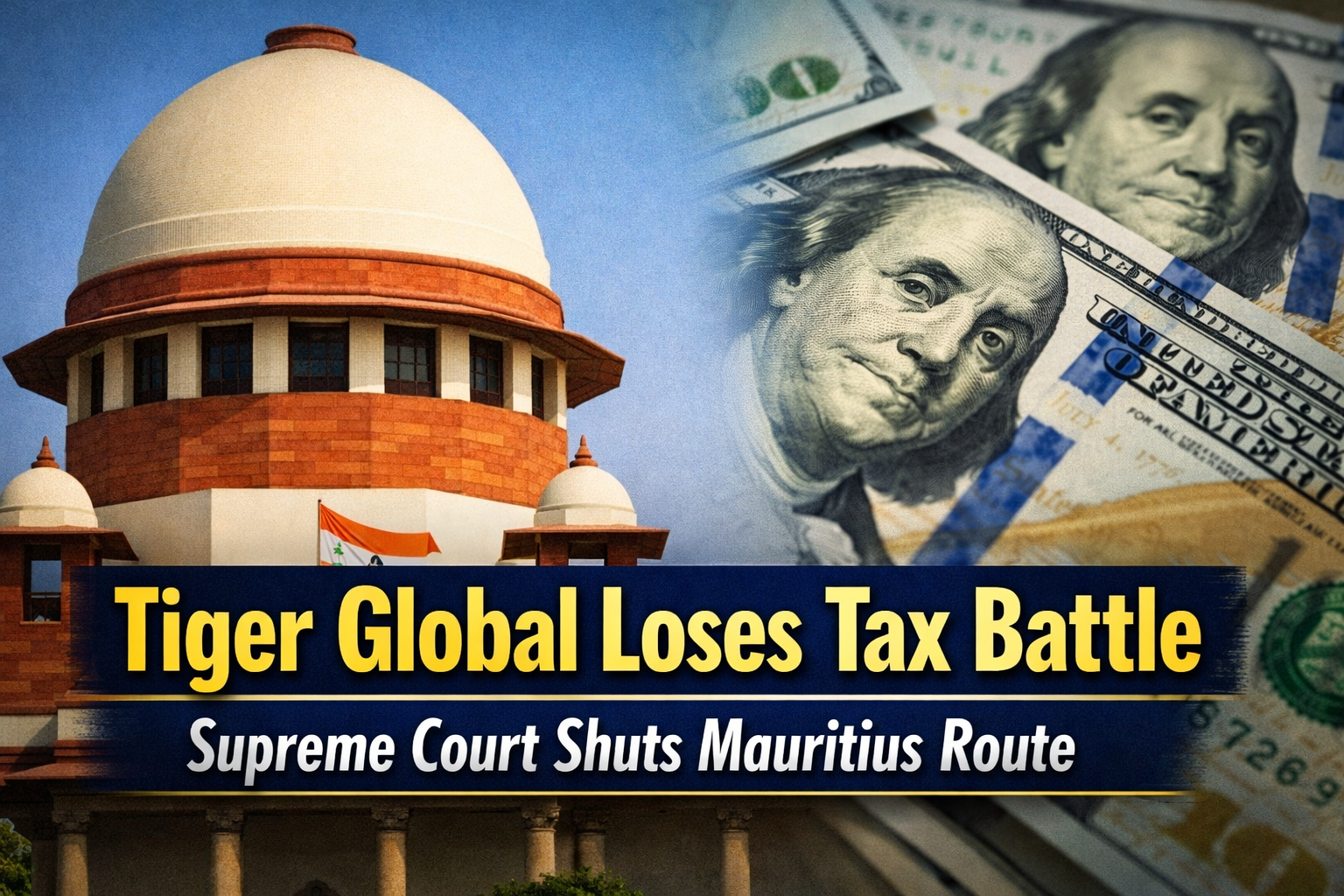
Tiger Global vs India: Supreme Court's Flipkart Tax Verdict
In an interesting ruling, the Supreme Court overturned the judgement of the Delhi High Court on the legitimacy of Tiger Global claiming capital gains tax exemption on the Flipkart sale deal. However, the last word is yet to be said.
A quick background to the case
When Wal-Mart acquired Flipkart in 2018, one of the major stake sellers was Tiger Global, which sold shares worth $1.6 billion to Wal-Mart. Before selling the shares, Tiger Global had sought permission from the Indian authorities to receive the proceeds of the sale without deduction of tax at source. That permission had been denied. Subsequently, the tax authorities and the AAR had ruled against Tiger Global, underlining that Mauritius Treaty could not be misused on form. It needed substance, which was lacking. Despite the Delhi High ruling in favour of Tiger Global, the Supreme Court has now set matters to rest.
Traditional form versus substance debate
It is once again back to the traditional form versus substance debate, which we have seen so often in cases like Cairn India and Vodafone India. In the Tiger Global case, it happened after the new tax rules were implemented in 2016, which clearly stated that use of the Mauritius route would only be permitted if there was economic justification. Merely having a front company in Mauritius to route the transaction would not qualify as a legitimate claim for capital gains tax exemption. Supreme Court has ruled that in the case of Tiger Global the Mauritius entity was purely a front for avoiding payment of taxes.
Global investors have a different perspective
However, global investors seem to be looking at it from a combination of legal and pragmatic factors. Their first argument is that Tiger Global had a legitimate Tax Residency Certificate (TRC) in Mauritius. That argument has been dismissed by the SC on the ground that mere TRC does not prove the genuineness of the transaction. Secondly, global investors have also remonstrated that most of them are already paying taxes on income in their home country. Taxing them again in India would tantamount to double taxation, making the entire economics of the transaction unviable. Thirdly, they have cautioned that such moves could impact flows from FPIs, venture funds, and global private equity.
Government must give out a synchronized message
In a sense, the Supreme Court is right that substance has to rule over form to judge the genuineness of the transaction. Putting that into practice may not be all that simple. We need not give too much weightage to threats of FPI outflows; which have been negative in 3 out of last 4 years. Also, STT did little to dampen FPI sentiments, and even this will not. But that is not the point. India has to give out a more synchronized message. Union Budget plans to lay out measures to attract FPI investments, and the court verdict looks more like hounding. From a broader perspective, it is not the sophistication of debate, but giving a progressive image that matters. That seems to be the missing link in the story!
Want help choosing funds that suit your goals?
Start with Tick FundsDisclaimer: Mutual fund investments are subject to market risks; read all scheme-related documents carefully. SERNET is an AMFI-registered mutual fund distributor and receives commission from fund houses.
Was this article helpful?