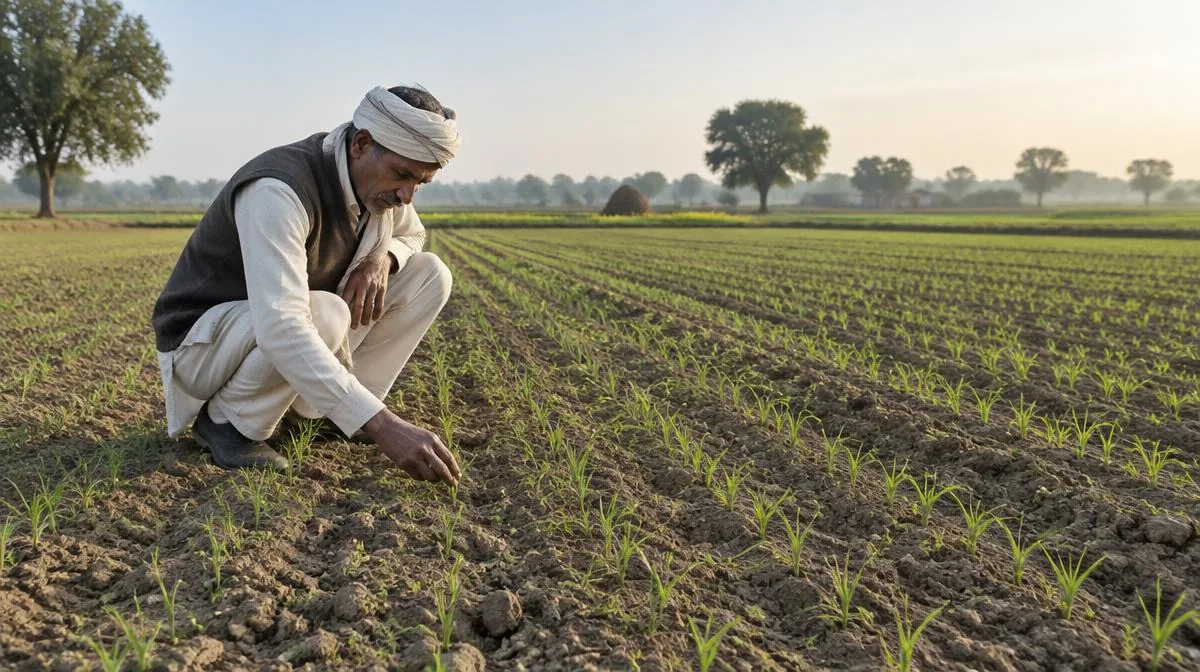
Rabi sowing – This weakness is the real big risk for Indian economy
Kharif output for 2026 may have been just about 4-5% below the 2025 levels, which is not such a big risk for the Indian economy. However, the real risk is the sharply lower Rabi sowing this year, which could have deeper repercussions.
Kharif output for 2026 may have been just about 4-5% below the 2025 levels, which is not such a big risk for the Indian economy. However, the real risk is the sharply lower Rabi sowing this year, which could have deeper repercussions.
How bad is the Rabi update this year?
Between 2025 and 2026, Rabi sowing has fallen from 69 lakh hectares to 37.6 lakh hectares. That is a fall of -45.6% in Rabi acreage. What exactly caused this massive Rabi shortfall? October rains were about 48% short of target in most of the key Rabi sowing regions. Also, the 13% deficit in monsoons this year left the top soil dry and reservoirs at below 50% levels. This has drastically reduced the pre-sowing and post-sowing irrigation rounds that Rabi crops like wheat and mustard need. One has to wait for full-year Rabi output, but it is likely to be significantly lower than last year.
Opens the gates for higher food inflation
Food inflation in September had touched 7.4% and for October it is expected to be well above 8.0%. This is despite the Kharif output being only marginally lower than last year. However, the impact of Rabi, which contributes nearly half of the agricultural output, is going to be quite harsh. The major crops likely to be affected this year are wheat, pulses, and oilseeds. Rice inflation is already up and now even wheat inflation could catch up. That could be economically tough and politically unpopular. Higher food inflation will also keep headline inflation above the upper tolerance of 6%, and compel the RBI to take up another 50 bps to 75 bps of rate hikes to quell the price impact.
Domestic food security will be a big issue
In a world, where countries are increasingly acting in an insular way, it is always an advantage to be self-sufficient in food. Nearly 70% of Rabi foodgrain output is accounted for by wheat, and that is where most of the pressure is expected, especially in the Northern regions of India. Wheat planting is lagging by over 12% as of November, and in specific geographies, it is much higher. This is likely to reduce yields and also make India depend more on food imports. India is already a heavy importer of oilseeds and pulses as the domestic output has been insufficient to meet domestic demand. That could only get exacerbated. This is also likely to put further pressure on the trade deficit.
Big concern will be on rural demand
Does lower output impact rural incomes and rural demand in a big way? In 2026, the Kharif output was just marginally lower and that had a fairly big impact on FMCG sales, as reported by most companies. In fact, tractor sales turned negative in the year, and that had a major impact on the stock price of M&M and other tractor companies. Most of the farm demand is based on current income and not on past savings. Hence, any reduction in income levels in the year will directly impact the rural income levels and, therefore, the rural demand. If the Rabi is below par, one can expect a much deeper impact on the demand for farm equipment, entry level cars, 2-wheelers, and FMCG products.
Turn market insight into a plan for your money.
Talk to usDisclaimer: This content is for general information and education only and is not a recommendation to buy or sell any security.
Get SERNET Insights in your inbox
Market updates, IPO notes and money guides. Unsubscribe any time.
Was this article helpful?