US Fed – The dilemma is back; this time of a different kind
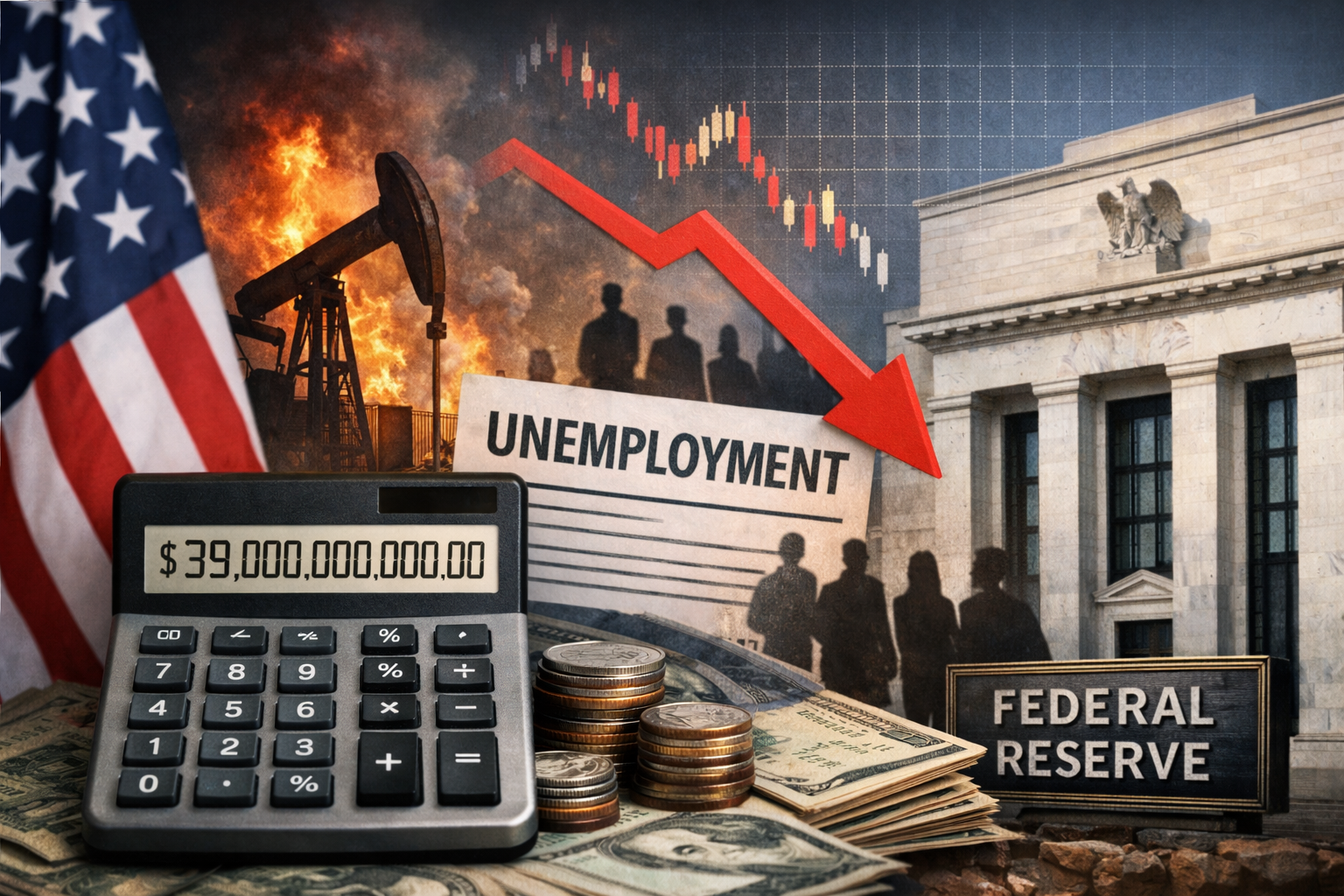
As the US and Israel continue to engage Iran in a prolonged war, there is a different kind of battle that the US is fighting at a macro level. Behind the fancy GDP and market cap numbers, there is a huge economic challenge.
Strange numbers about the US economy
What most of us get to hear is the $29 trillion GDP of the US and its $61 trillion market cap. That Buffett ratio of 210% itself is a worry, but we will not get into that. There are 2 other data points that are actually disconcerting. The first is the national debt of the US economy, which as per latest estimates stands at around $39 trillion. Yes, that is nearly 140% of the annual GDP of the US. In addition, the budget deficit (fiscal deficit) of the US is around $1.70 trillion, which translates into a tad over 6% of GDP. With the ongoing war in the Middle East and the soaring costs of war on a daily basis, it is only obvious that the level of US debt and the level of budget deficit will spike further.
Beyond fancy market cap numbers
When the US jobs data for February 2026 was put out by the Bureau of Labor Statistics (BLS), two data points came as a shocker. Firstly, the rate of unemployment which had stabilized in the range of 4.2% to 4.3%, suddenly spiked to 4.4% for the month of February. But that was just the trailer. Normally, the debate is about the extent of payroll expansion. However, in February, the payrolls again contracted by -92,000. In the last 9 months since June 2025; the US economy saw job contractions on 5 occasions. Ironically, between Jan-2015 and Dec-2024, the only payroll contraction was seen in the COVID months of Mar-Apr 2020. In the last 1 year, it has almost become a norm.
Will the Fed now deliver the interest rate cut?
There are growing expectations that when the FOMC meets next in March, there could be another rate cut of 25 bps. In fact, after the contraction in jobs, it was expected that the CME Fedwatch would start reflecting a much higher probability of rate cuts, but that has not happened. Even as Trump has held on to his demand for more aggressive rate cuts, Jerome Powell and the FOMC have stood their ground. For now, it is not too clear if the FOMC would take a rate cut decision based on the latest data. Also, 3 rate cuts have happened in the last quarter of 2025, but despite that the jobs have contracted in 5 out of the last 9 months. Hence, the correlation itself looks tenuous.
Inflation may be the bigger concern for the Fed
The real concern for the Fed would be oil prices. For instance, if one were to look at the WTI Crude futures price (the US benchmark); it has rallied from $65.21/bbl to $90.90/bbl since 26-February. That is a 39.4% rally in crude oil prices in just 8 days flat. That has a lot of implicit consumer inflation for the American economy, which may only manifest in the next couple of months. That is the dilemma for the Fed. The pressure on jobs is likely to again raise the demand for rate cuts. But with the 39.4% rally in crude prices, the inflation implications are huge. FOMC will not want to take a risk by cutting rates, especially when it is close to neutral rates. March FOMC may be the real test!
Turn market insight into a plan for your money.
Talk to usDisclaimer: This content is for general information and education only and is not a recommendation to buy or sell any security.
Was this article helpful?