 Announcement: Lorem ipsum dolor sit amet, consectetur adipiscing elit. Donec et quam blandit odio sodales pharetra.
The biggest challenge for HAL in coming quarters is execution
How does a government react when its major defence company faces execution challenges? That is a major crisis, and it has put the government into a huddle on immediate challenges facing HAL.

Written by: SERNET Research Team
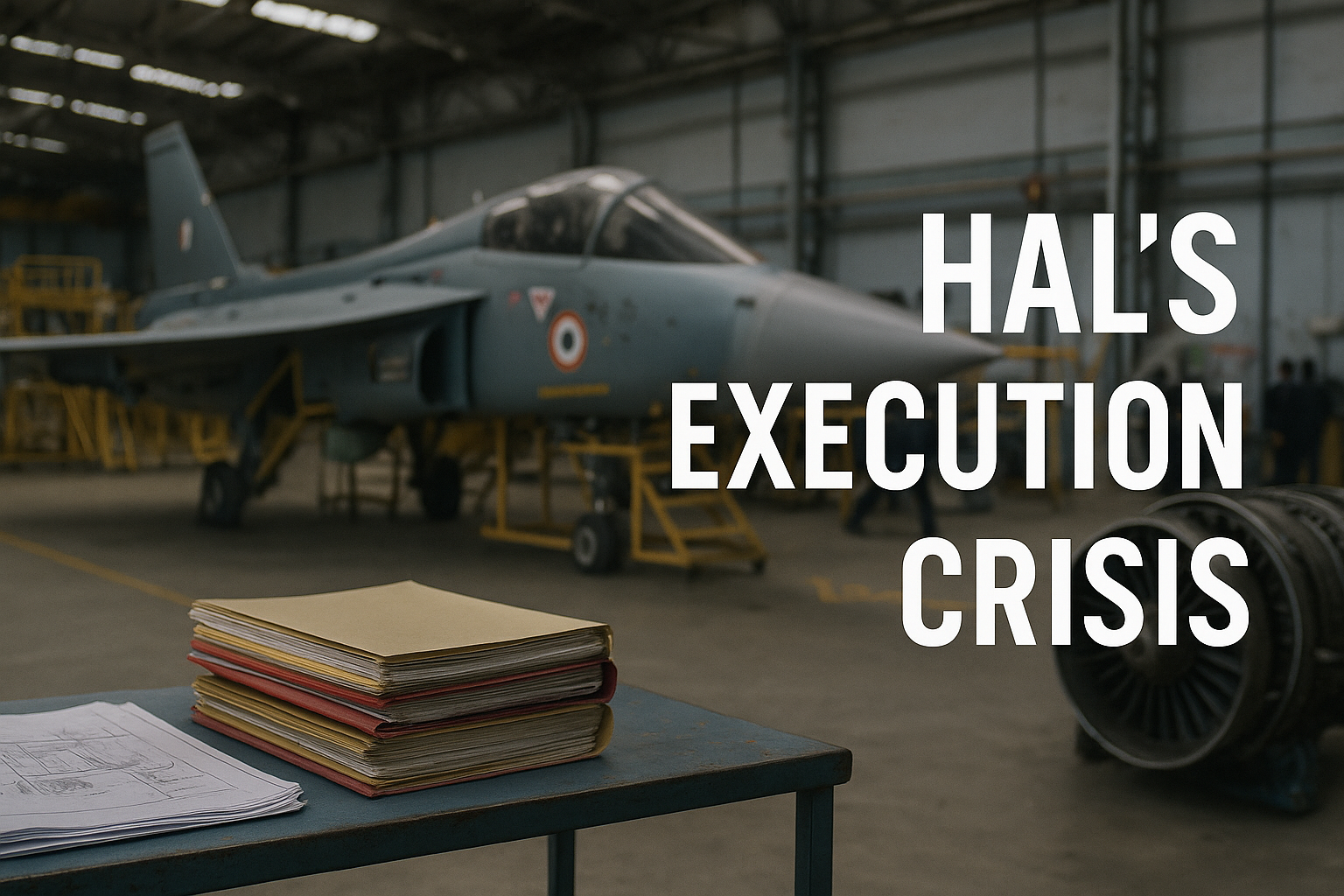
Table of Content
A phenomenal returns story
In India, investors rarely believed that a PSU company could flatter the markets. But that is exactly what HAL has done in the last 5 years. The stock price is up 17 times since mid-2020. That translates to CAGR returns of an incredible 69.17% over the last 5 years plus. With that kind of returns, the focus automatically shifts from the past returns to the future. On the face of it, the future looks bright for HAL. It has an overflowing order book position and the government is likely to continue in-sourcing defence needs.
Missing link is execution
With the latest Tejas order worth a huge ₹62,400 crore, the order book of HAL stands at over ₹2,50,000 crore. Despite such an impressive order book, sales of HAL have been struggling to grow at more than 8% annually. That is clearly out of sync with the kind of outstanding order book that the company has. The missing link is execution. Despite huge orders flowing in, there is very little shift in the execution capabilities of HAL. And that is really pinching the company. The delays are creating an issue of defence preparedness, resulting in penalties by armed forces, leading to lower margins.
Execution delays and revenues
How do the execution delays impact the revenues? For that, one needs to really apprehend how the defence contracts are priced and how revenue in these cases is recognized. Sales in the defence contracts are recognized on the basis of milestones met and progress verified. It is tough for HAL to meet such an order growth with its current capacity, and it is not going to change in a hurry. While sales get back-ended on milestones, this also results in penalties by armed forces for delays in execution. In the recent quarter, such penalties were reason for the fall in operating margins. HAL also faces serious issues of capacity, input supply chain, and manpower availability.
Inputs and manpower issues
While capacity is coming on stream, HAL still relies on companies like GE for its engines. That has been an issue. HAL needs to create its own reliable supply chain ecosystem, which is missing. The other big issue is manpower. The people strength at 28,000 is much lower than earlier years. Also, most of the senior persons have retired, while the young professionals are preferring the private sector for its more attractive pay. The real challenge for HAL is structural. The government has to move in quickly to address these issues, especially the big challenges of supply chain, manpower, and capacity. Else, Atma Nirbhar Bharat, may not deliver the goods on time!
Comments