 Announcement: Lorem ipsum dolor sit amet, consectetur adipiscing elit. Donec et quam blandit odio sodales pharetra.
Hindustan Unilever may have finally solved the distribution puzzle
A recent decision by Hindustan Unilever to launch “Direct to Kirana” across major metros has met with a lot of resistance from distributors. This is a change that was due and HUL is just playing along.

Written by: SERNET Research Team
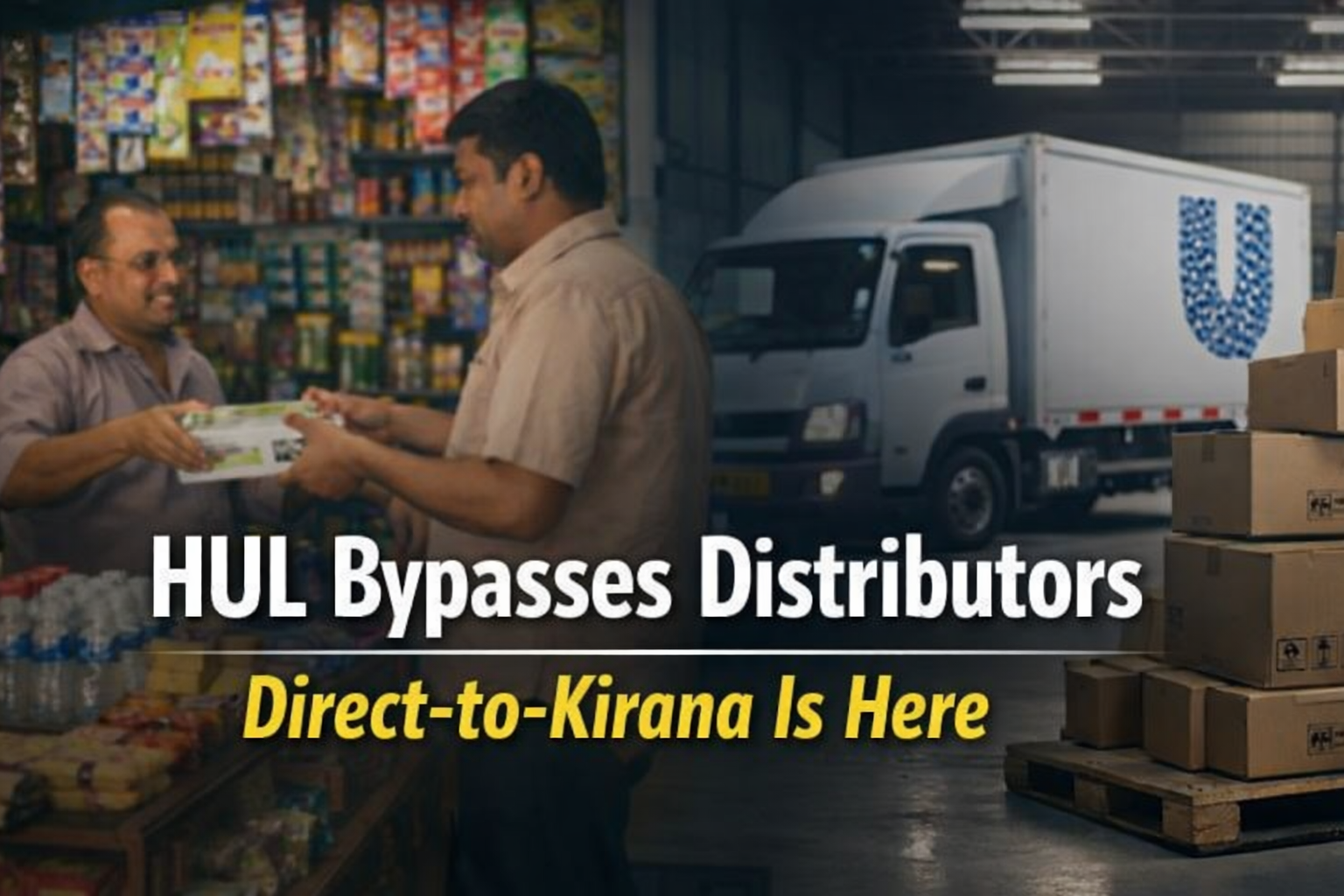
Table of Content
Why are Distributors unhappy
We have long been used to a traditional FMCG selling model. The manufacturer sells to the distributors, who then takes care of the wholesalers and retailers so that the products reach the final target. The concern that HUL had was that it had little direct interface with the Kirana store owners who account for 80% of sales of HUL products. Not much will change for the end customer, who can still either go to the Kirana store or order online. It is the logistics back-end that will change. HUL will take care of the logistics and the stocking, instead of the distributors.
HUL currently has a huge army of 3,500 distributors and reaches out to 9 million Kirana stores across India. However, HUL has direct interaction only with a small fraction of the Kirana stores, which are their real customers at the backend. HUL feels that the Direct to Kirana will speed up the entire distribution process as the stocks and the order routing will be done by HUL. While HUL claims that income of distributors will not be impacted, it just needs simple logic to realize that they will eventually lose their importance in the back end, which they had dominated. But that is a logical part of HUL evolution, and there is not much distributors can do.
Marrying D2K with Ecommerce
When we refer to ecommerce, we often talk about the internet sales to retail customers. The D2K is more about online wholesaling. HUL already operates an app Shikhar, wherein, the Kirana stores used to route orders through distributors. Now these Kirana stores can directly do an interface with HUL and ask for the orders they want. In the process, the time to delivery is cut down to 24 hours. This will ensure that the neighborhood Kirana store continues to stay relevant at a time when you increasingly find the online ecommerce delivery apps like Swiggy, Zepto, and Zomato eating away. It is a good move for the Kirana stores to consolidate their market share. They still have 80%, but these shares dwindle fast.
Distributors must adapt
It may sound unfair, but distributors have no choice but to adapt. On the one end HUL is under stress amidst weak urban demand, tepid rural demand, and thin margins. The one thing that can save the day for HUL is a more efficient and flat back-end model. Supply chain models are undergoing transformation in most of the industries and FMCG is no exception. For the Kirana Store, it gives them one more chance to continue to stay relevant in servicing the needs of the area. The job is much more complicated for the distributors as they lose their franchise. They need to figure out how they will continue to play a relevant role here!
Comments