 Announcement: Lorem ipsum dolor sit amet, consectetur adipiscing elit. Donec et quam blandit odio sodales pharetra.
RBI has finally cut rates; at a time when it should have stayed put
RBI governor Sanjay Malhotra, left little to the imagination of investors. He clinically cut repo rates by 25 bps, but did not move on the other parameters. Rate cuts may have been a bad idea!

Written by: SERNET Research Team
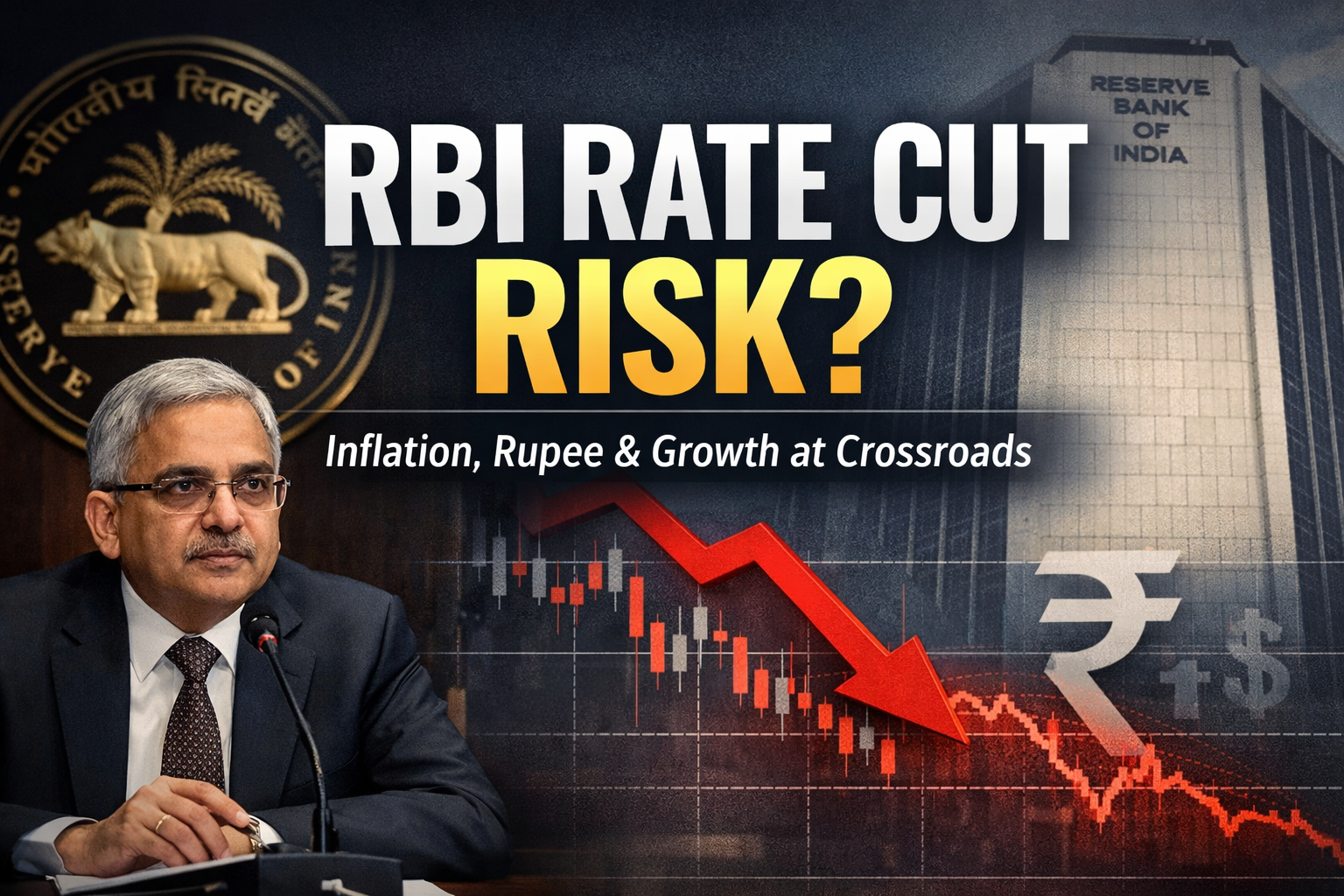
Table of Content
Inflation is far from conquered
The message of the RBI governor was that the inflation was largely in control and it was time to look at GDP growth. One can argue that the rate cut will act as a complement to the tax cuts in the Union Budget. However, a 25 bps will make little difference either to the cost of borrowings of corporates or the EMIs of households. It also gives the image that inflation is under control, whereas it is nearly 120 bps above the RBI target. A rate cut could only trigger inflation.
Rate cuts have rarely delivered
The more practical side of the story is that the rate cuts have hardly delivered growth in the past. For instance, it is hard to remember when was the last time that GDP growth got a boost from a rate cut in India. If rate cuts were the answer to the growth challenge, then Japan would be growing at much higher rates of growth, rather than stagnating despite near-zero rates of interest for as long as one can remember. Rate cuts can work well as a liquidity measure, but only in a crisis situation. In normal times, it is hard to buy growth by just cutting the rate of interest. RBI should have just stuck to inflation and jobs.
It is actually about the Rupee
One of the logical links between repo rate and the currency is that rate hikes strengthen the currency while a rate cut tends to debase the currency. India has to be extremely careful about this point. In the last few days, the rupee cracked beyond ₹87.50/$, largely on account of the rate cuts. A rate cut means that the Indian bonds become less attractive to global investors and it could only trigger a fall in the rupee. It would be naïve to believe that the US case study would apply in the Indian context. The US has the exorbitant privilege of being the global currency of choice for trade and investments. Even if the rates in the US were to go down, dollar demand would still be there. The INR does not have any exorbitant privilege like the Dollar.
Imported inflation; the X-factor
In the last few months, Indian inflation has been high due to the predominance of this X-factor. The USDINR is at ₹87.5 per dollar and this is largely due to the rather vicious cycle of mutual impact. India still heavily depends on imports for crude oil, copper, electronic goods, etc. In this light, any weakness in the rupee will be a double whammy. On one hand, it widens the trade deficit and on the other hand it makes imports costlier. That is why rate cuts may, at best, be a one-off event. The situation is just not conducive enough for more rate cuts. At least, that is not a growth solution!
Comments