 Announcement: Lorem ipsum dolor sit amet, consectetur adipiscing elit. Donec et quam blandit odio sodales pharetra.
Why India’s Trade Numbers Are Showing Pressure: A Deep Dive Into FY26 Deficit
India’s trade deficit has hit $78.15 billion by Oct-25, driven by falling exports, rising imports, and slowing services growth. With US tariffs tightening and CAD likely crossing 3% of GDP, India faces a challenging macroeconomic cycle. Here’s what the data really tells us — and why it matters.

Written by: SERNET Research Team
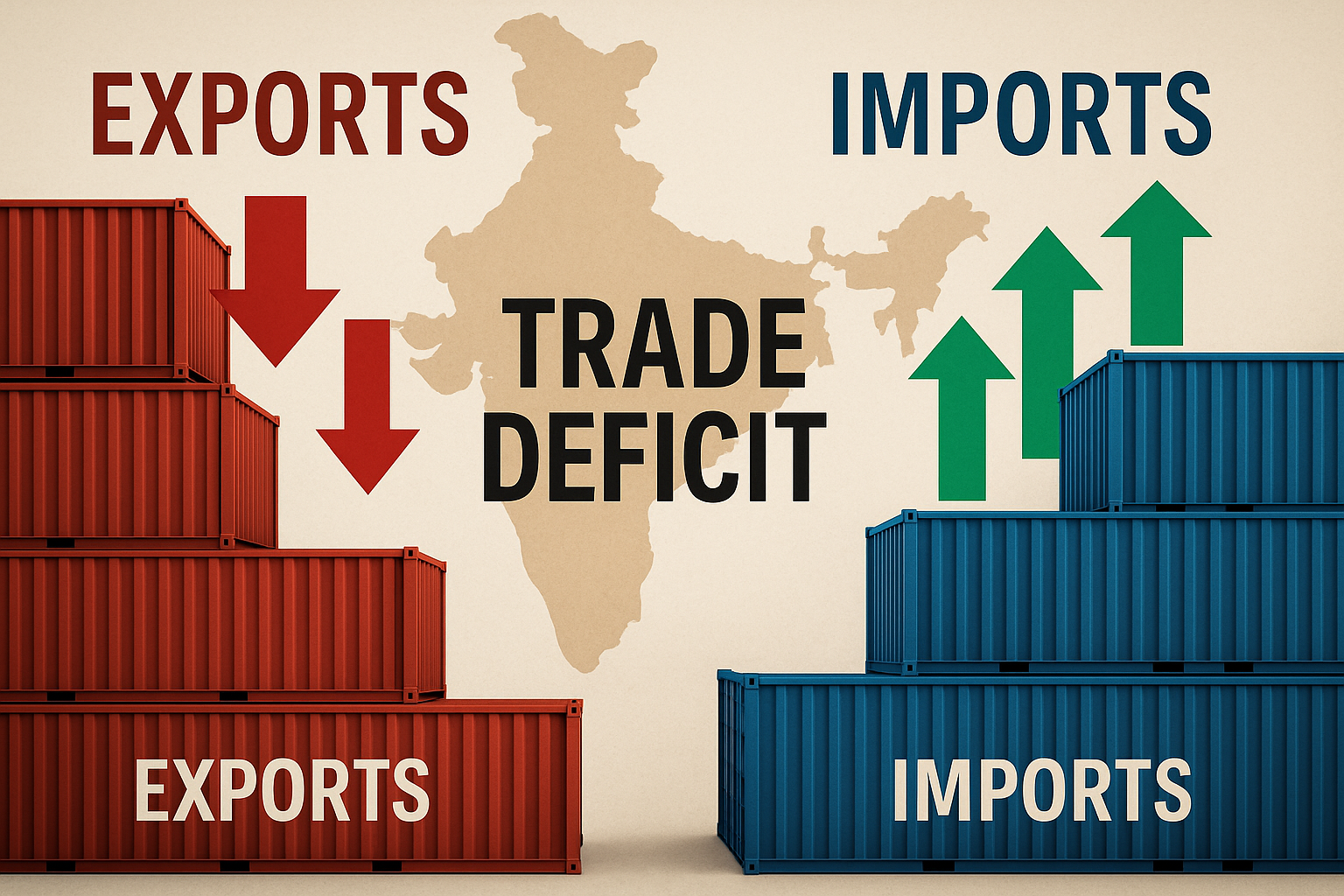
Table of Content
Why Are Trade Numbers Showing Pressure?
To understand the real pressure in trade numbers, one must look at the cumulative trade deficit, rather than just the Oct-25 deficit of $41.6 billion. The overall trade deficit as of the end of October 2025 stands at $78.15 billion. This is the actual deficit after the goods deficit has been adjusted for services surplus, so this directly impacts the current account deficit. Why did the deficit spike so much this month. Exports are already in trouble due to US penal tariffs and the trade surplus with the US is narrowing. Also, many US companies are getting cautious on services orders; so, it is a double-whammy!
| Trade Deficit Header
(Year-to-Date) |
FY26 (Apr-Oct) |
FY26 (Apr-Sep) |
FY25 (Apr-Oct) |
Change YOY (%) |
| Merchandise Exports | 254.25 | 220.12 | 252.66 | 0.63% |
| Merchandise Imports | 451.08 | 375.11 | 424.06 | 6.37% |
| Total Merchandise Trade | 705.33 | 595.23 | 676.72 | 4.23% |
| Merchandise Trade Deficit | -196.83 | -154.99 | -171.40 | 14.84% |
| Services Exports | 237.55 | 193.18 | 216.45 | 9.75% |
| Services Imports | 118.87 | 97.68 | 114.96 | 3.40% |
| Total Services Trade | 356.42 | 290.86 | 331.41 | 7.55% |
| Services Trade Surplus | 118.68 | 95.50 | 101.49 | 16.94% |
| Combined Exports | 491.80 | 413.30 | 469.11 | 4.84% |
| Combined Imports | 569.95 | 472.79 | 539.02 | 5.74% |
| Overall Trade Volume | 1,061.75 | 886.09 | 1,008.13 | 5.32% |
| Overall Trade Deficit | -78.15 | -59.49 | -69.91 | 11.79% |
| Data Source: Ministry of Commerce (figures are in $ billion) | ||||
Three Factors Triggered Record Trade Deficit In Oct-25
- The first factor that triggered the spike in trade deficit was -11.8% fall in goods exports in October due to tariffs. Imports were up 16.6% yoy, leaving a big gap.
- While crude imports were subdued, India has been facing a lot of pressure from rising imports of gold at $14.5 billion and electronics parts to cater to exports.
- Even on services, the US order flows are either reducing or coming at tighter pricing as US companies may need to pay 25% tax on outsourced IT services.
Why This Data Is Not Good News For Current Account Deficit?
There are some interesting takeaways from the cumulative trade data for the first 7 months of FY26; from April to October 2025.
- Most of the problems are in the goods account (shaded blue). The merchandise exports are almost flat at 0.63% on yoy basis. However, the imports of goods are up 6.37% on a yoy basis. This dissonance has been hurting the deficit.
- On the services front, the service exports are up 9.75% while the service imports are up 3.4% on yoy basis. The 25% tax likely to be imposed by the US on outsourced services is putting pressure on service orders, and the growth has slowed.
- The combined deficit of goods and services stands at $78.15 billion as of end-October and that is 11.79% higher than the corresponding period last year. This is largely because the exports growth of goods and services have grown in single digits only.
- The biggest question for India is the extent to which the services surplus wipes out the goods deficit and the share of service exports. In FY25, share of service exports was 93.4% of goods exports (more due to goods export stagnation). The services surplus could offset just 60.3% of the goods deficit, creating a big macro challenge.
The current account deficit (CAD) also factors in other parameters like the NRI deposit flows, and the interest and dividend payouts, but their impact is limited. The combined deficit is the single biggest determinant of CAD. At the current run rate, India may end up with CAD above 3% of GDP. That idea can weaken the rupee and make imports costlier. The immediate challenge would be to avoid this vicious self-hurting trade cycle.
Comments